
Three Reasons to Have a Running Shoe Rotation
by: Scott Douglas
Runners love to talk about shoes. In some of those discussions, you might hear someone talk about their shoe rotation—that is, the two or models they currently train and race in, with different shoes worn for different types of runs. Should you have a running shoe rotation? Here are three reasons to consider having more than one pair, and some guidance on how to build a rotation.
Reason #1: You’ll Probably Lower Your Injury Risk
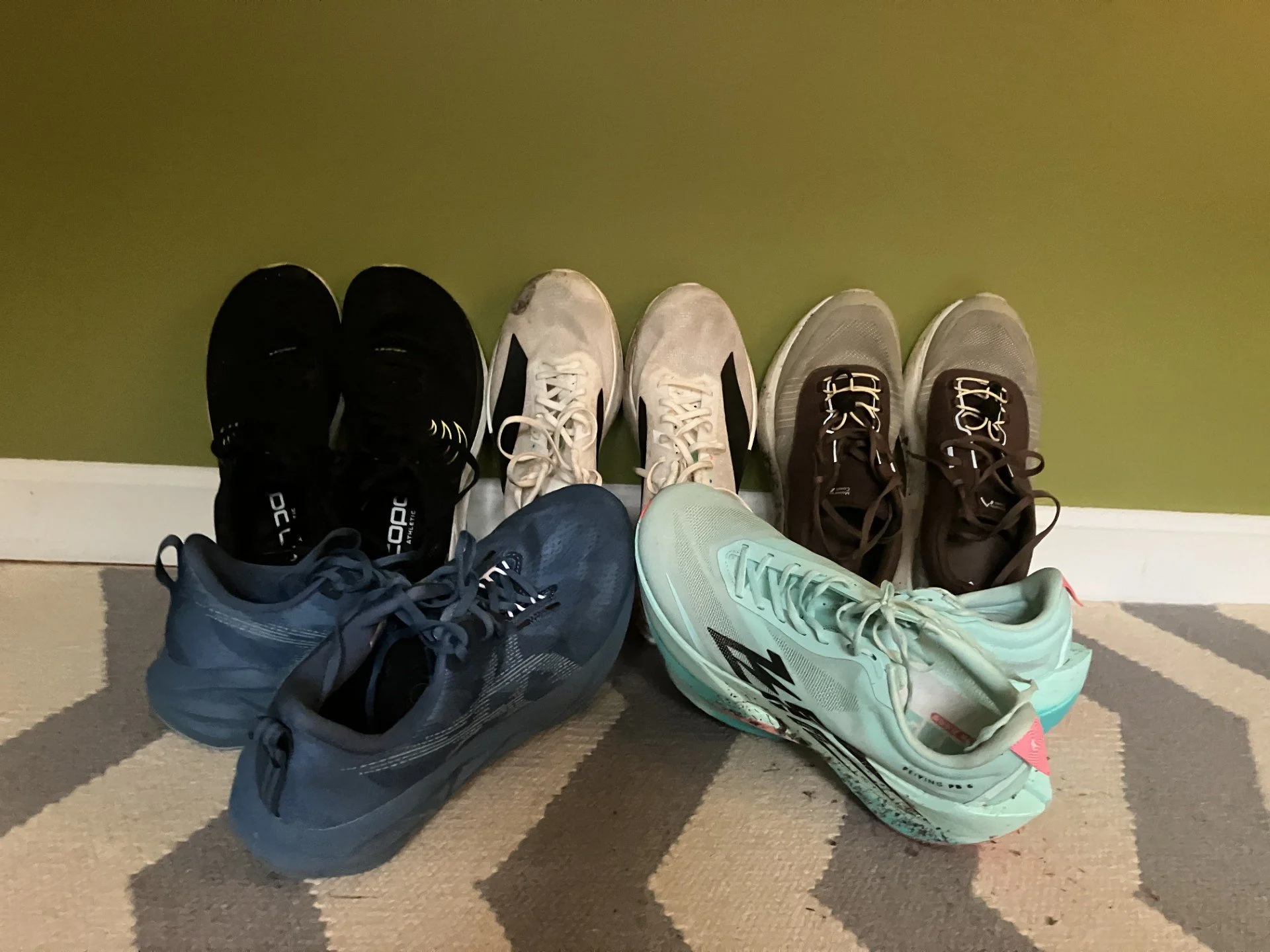
Rotating among different models is one of the few proven ways to lower your injury risk. A seminal study on shoe rotation followed two groups of runners for 22 weeks. The runners were similar in size, running history, and weekly mileage. About half of the runners did almost all of their runs in the same shoes. The rest of the runners rotated among three or more models. The runners who rotated shoes had a 39 percent lower rate of injury during the study period.
Rotating shoes likely lowers injury rates by varying the stress on your body. Most running injuries are from repetitive strain, so whatever you can do to alter how running’s impact forces are distributed should lower your injury risk. This can include different terrains, distances, speeds, and shoes.
If you can’t bear the thought of running in anything but your favorite model, you can still benefit from this line of thinking. The more you run in a shoe, the more it differs from your first few miles in it. The midsole compresses, the outsole gets worn, the upper and heel counter conform to how your feet move. So having two pairs of the same model with different mileage on them is a little bit like running in two different models. Buy a new pair of your favorite model once you’ve run 100 to 200 miles in an older pair. Then alternate them so that the mileage difference between the two pairs remains at least 100 miles.
Reason #2: You’ll Probably Perform Better
Top runners have long had shoe rotations. That’s because they view shoes as tools, with different ones best suited to different types of runs. The shoes that are the best tool for a track workout are probably not ideal for an easy run in the woods, for example. If your running involves a decent variety of paces and distances, you’ll probably get more out of those runs—and enjoy them more—by wearing shoes designed for specific purposes.

There are two relevant means of differentiating among shoes here. The first is the intensity of a run. At the same effort level, you’ll run faster in a lighter, designed-for-speed shoe than a heavier, built-for-comfort model. The flip side is those speedy shoes might feel awkward and not protective enough if your legs are tired and sore the day after a long run.
The second consideration is the surface you’re running on. Road racing shoes are designed to help you move as fast as possible in a straight line on predictable asphalt. Their smooth outsoles and high, bouncy midsoles are no fun on trails. Even standard daily trainers can ruin a run in the woods if they can’t handle mud and rocks and roots. Conversely, trail-specific shoes are usually heavier and more controlling, and their outsoles are lugged. They’re not going to feel good for a 5-miler on neighborhood roads.
Run distance can also come into play. Some runners prefer their most cushioned, protective shoes for long runs. Others prefer lighter, lower models that will be easier to keep turning over in once their legs really start to tire.
Reason #3: Your Shoes Will Probably Last Longer
Have you ever noticed the little wrinkly lines in the midsole of a shoe you’ve run a lot in? Those are evidence of midsole compression, the reason why a shoe that starts as a delight to run in becomes a brick to discard.
Giving midsoles more time to decompress between runs is believed to extend their lifespan. So if you have, say, a three-shoe rotation, then the midsoles of those shoes get more rebound time. A shoe that might feel dead after 300 miles if you wear it daily might instead last another 100 miles if you wear it twice a week.
A shoe rotation also gives rain- and sweat-soaked uppers more time to dry between runs. This might reduce the odds of them ripping.
How to Build a Running Shoe Rotation
Now comes the fun part: Shoe shopping!
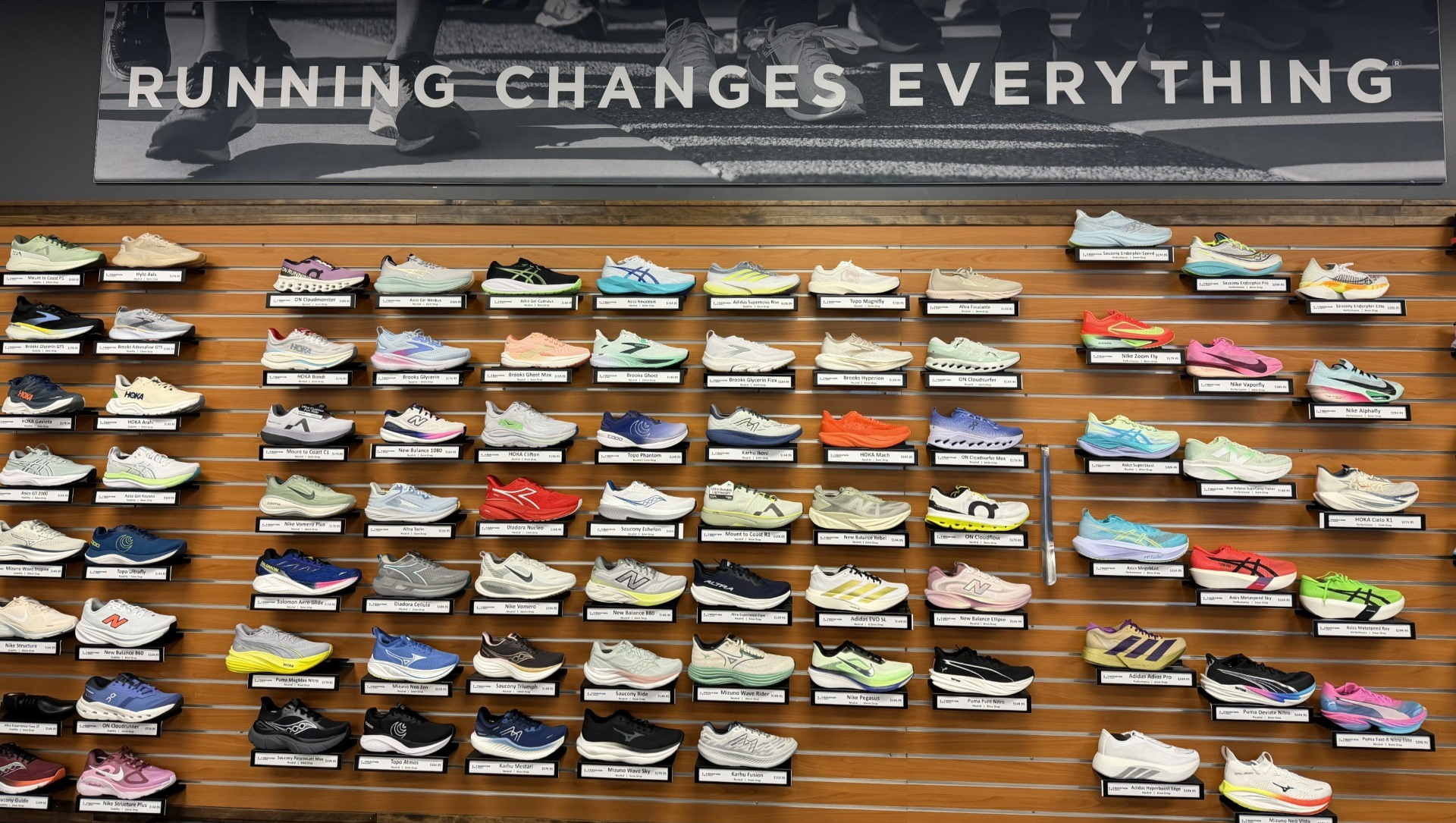
Let’s start with a two-shoe rotation. We’ll assume you already have an everyday trainer. Which type of model to add depends on what your focus is over the next few months.
If you’re going to add more intensity and perhaps run some races shorter than a half marathon, a shoe designed for faster running is your best choice. You would wear it for track workouts, tempo runs, and in your races. You could get either a true racing shoe or what many brands market as “speed trainers,” which are more substantive than most racing shoes but lighter and more nimble than most daily trainers.
If you’re going to add more volume, perhaps in preparation for a half marathon or marathon, a shoe designed for sustained comfort is your best choice. For many runners, this will mean a highly cushioned training shoe, many of which are called “max stack” models.
If you’re going to split your running time between roads and trails, a shoe designed for off-road running is your best choice. You could get either a true trail shoe or one of the many excellent road-to-trail models available. The latter are also known as “hybrid” or “gravel” shoes. They have a sturdier upper and more lugged outsole than typical road shoes, but the lugs are short enough and the midsole is lively enough that the shoes also feel good when you’re getting to and from trails via roads.
A three-shoe rotation is a great option for most runners. Besides your daily trainer, you could add a highly cushioned shoe for recovery runs and a go-fast shoe (either a racing model or a speed trainer) for hard workouts and races.
If you race a lot and want to save wear and tear on expensive racing shoes, consider a four-shoe rotation: Daily trainer, highly cushioned model for recovery runs, speed trainer for hard workouts, and a racing shoe used almost exclusively on race day. (It is, of course, a good idea to do a handful of workouts in your racing shoes to make sure they’ll work for you when it matters.)
Buying more shoes might seem like a budget buster. But if you can handle the up-front cost, your shoe rotation will ultimately save you money, because your shoes will last longer. You also lower your injury risk and enjoy your running more. And that’s priceless.