
Why Does My Knee Hurt When I Run?
If you have been out for a run and feel a twinge, ache, or tightness in or around your knee, you are not alone. 65% of individuals experience running related injuries each year. Of these injuries, 50% of them affect the knee. Why does my knee hurt like this when I run and what can I do to prevent this from happening?
The knee is a complex hinge joint that requires repetitive movement of the tendons and kneecap with each stride you take. The average runner will take 5400 steps during a 3-mile run. If the joint has an imbalance, this can lead to excessive friction and irritation. Most often this starts as a twinge of discomfort but can increase to inflammation and true injury if not addressed.
There are four primary reasons for your knee pain. Let’s dive into these and discover how to fix them.
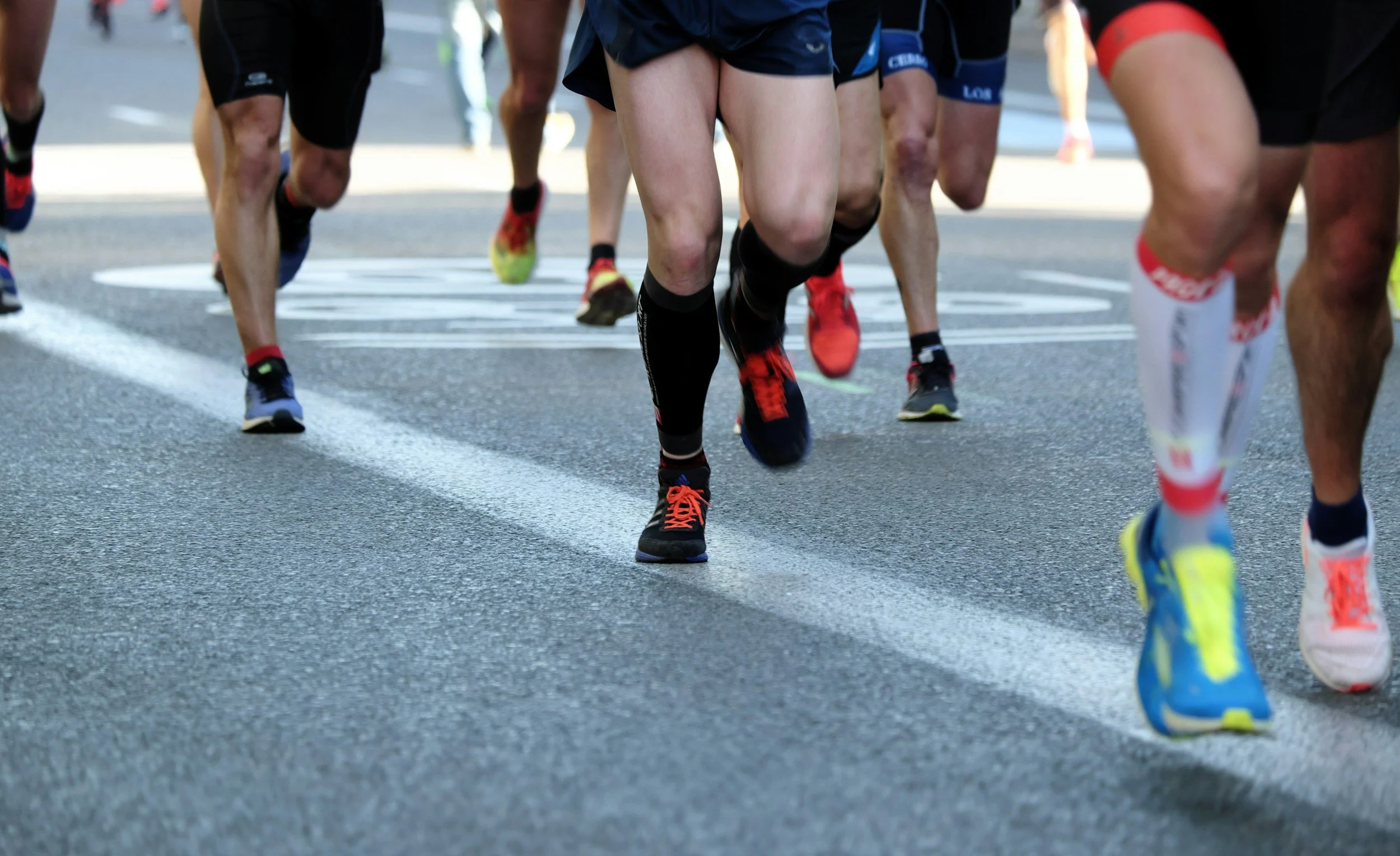
Reason #1: Overuse
One of the primary reasons for injury while running stems from lack of load adaptation. This is a fancy way of saying that you built your running frequency and volume too fast. If your knees are not ready for the impact, the tendons and joint can become irritated.
Remedy:
Rest and treat with ice for a few days. If this calms it down, check your recent running log and if you did one of the following: added more than one day of running to your normal in a week, increased your total weekly volume by more than 10-15% per week, or added more than one more intensity run compared to your normal. If you did, limit overuse by avoiding in the future.
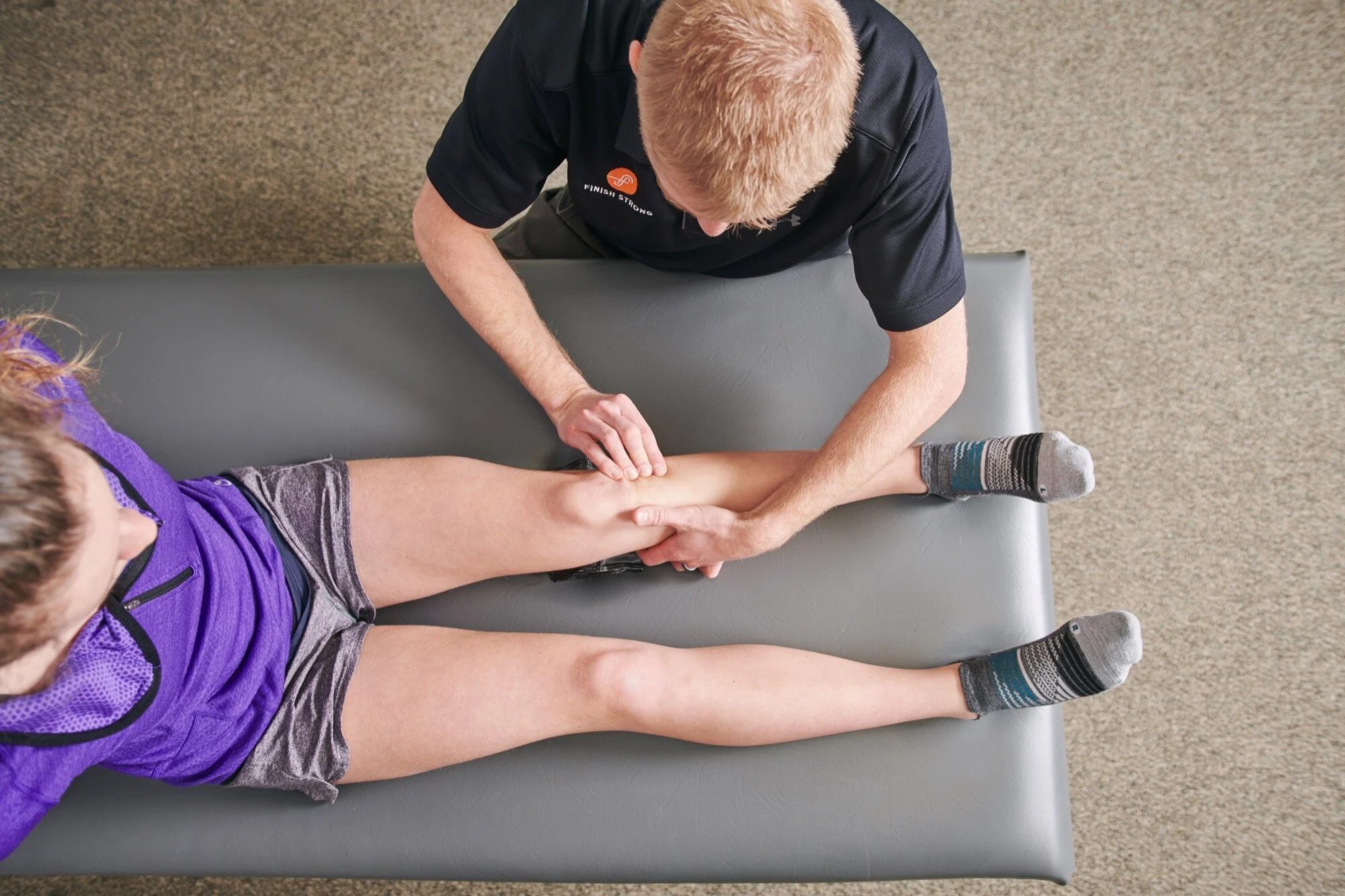
Reason #2: Poor General Base
An imbalance around your knee can lead to poor tracking of the patella or place an awkward strain on the tendons. This can result from poor hips and core stability, lower extremity strength, or lack of foot control.
Remedy:
This is not a quick fix. For the short term, rest and treat with ice for a few days. Cross training during this time can help maintain mobility. Longer term, start to incorporate general lower extremity strength and stability specific to your running needs.
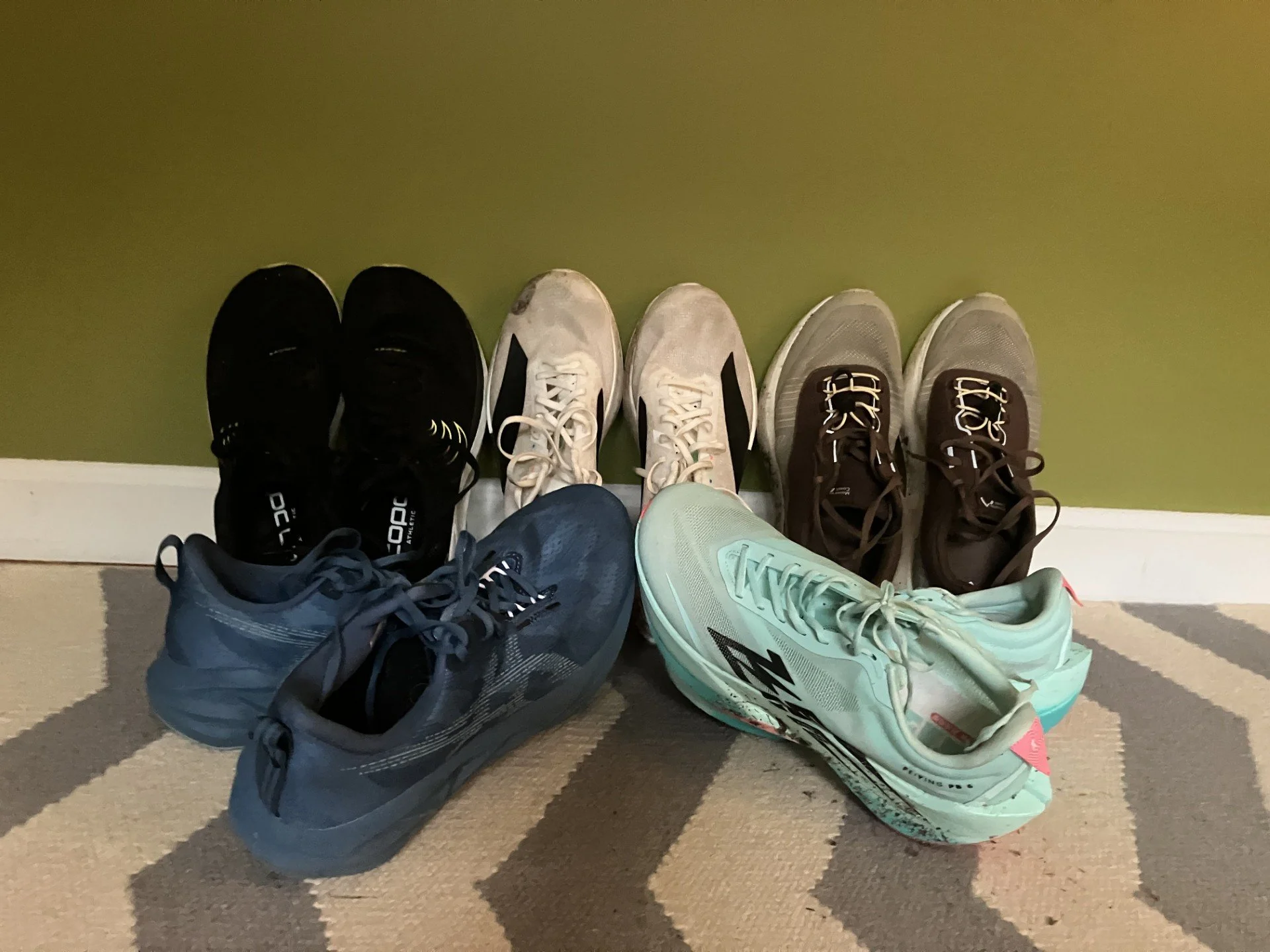
Reason #3: Your Shoes
Have you run in the same pair of shoes for more than 2-3 months or 300 miles? If so, it may be time to upgrade. Shoes wear out over time and start to take the shape of your foot and landing pattern. This will feel good at first like a glove molded to your foot but eventually not provide the necessary support of spring that your body may be craving.
Remedy:
Consider a shoe rotation to introduce a variety of input for your feet and body. This has been shown to reduce your risk of injury and allows your shoes to last longer by mixing and matching, rather than buying one pair and waiting to replace them until they are worn into the ground. Looking for more information, check out our article on Finish Strong Shoe Rotation.

Reason #4: Running Mechanics
If you have tried the above and your knee pain persists, it may be due to your running mechanics. Most mechanical flaws don’t cause one bout of irritation but rather continued stubborn symptoms that seem to rear their head every time you hit a certain distance or running volume. Certain running styles can concentrate stress on your knees.
Remedy:
Consider a Running Assessment to have your form analyzed. This can determine if you have imbalances in your stride that can be re-trained through a combination of exercises and running mechanics drills and form correction.
If you've tried these strategies and your knee pain continues, don't ignore it. Persistent pain is your body's way of telling you that something needs attention, and addressing it early can help prevent a minor issue from becoming a long-term injury.
At Finish Strong, we look beyond the symptoms to identify the root cause of your knee pain—whether it's related to your training, strength, footwear, or running mechanics. From there, we'll create a personalized treatment plan to help you recover, improve your performance, and get back to running with confidence.
Ready to run without knee pain?
Schedule an evaluation with Finish Strong today and let us help you get back to doing what you love.