
Stay Ahead of Injuries and Swim at Your Best This Season
As high school and club swim seasons collide, many swimmers find themselves logging more yards, more practices, and fewer rest days. While this training overlap can build fitness and speed, it also increases the risk of overuse injuries—especially in the shoulders, upper back, and hips.
The good news? Many swim-related injuries are preventable with the right screening, strength work, and early intervention.
What Is a Swim Injury Screen?
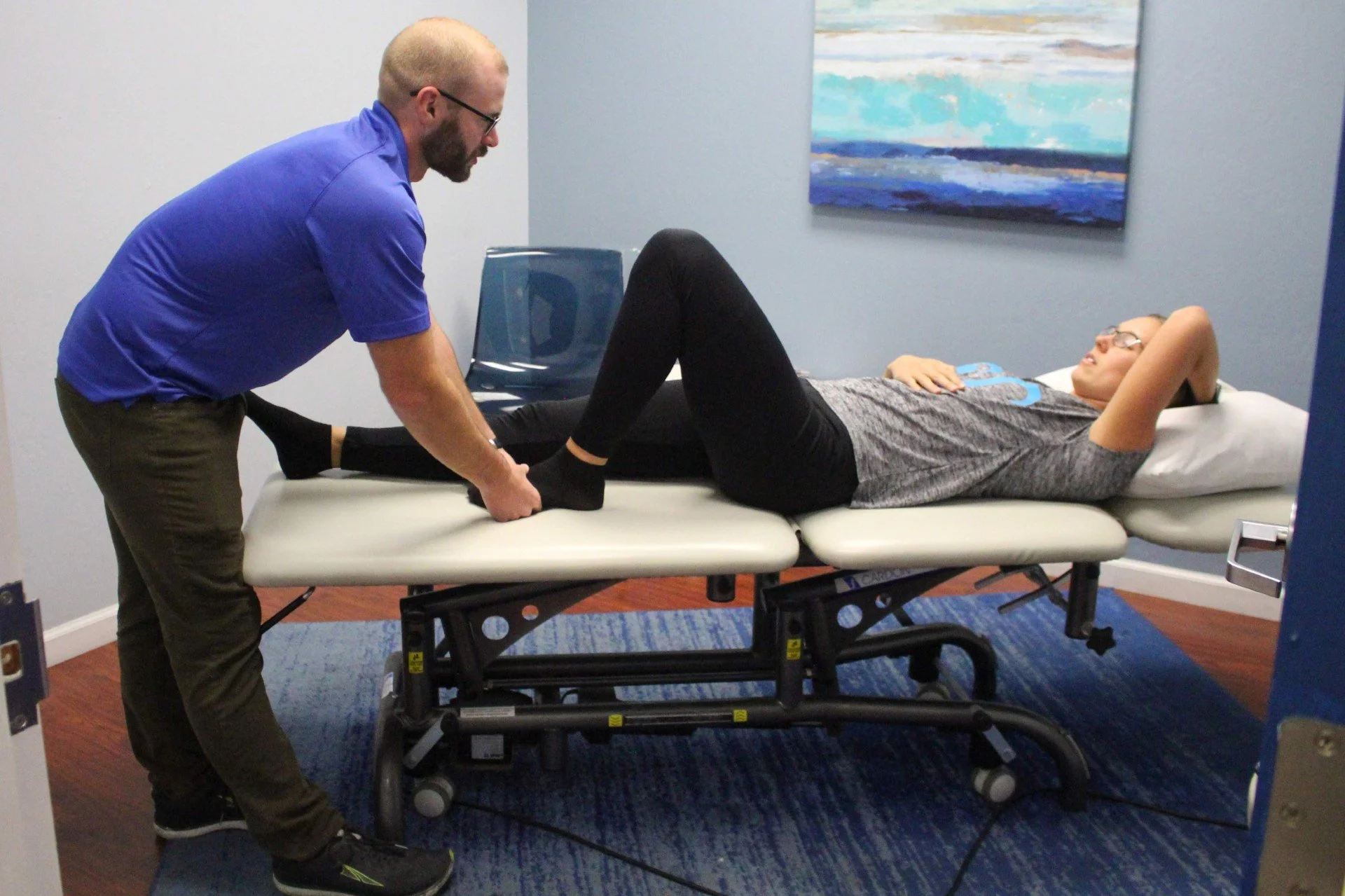
A Swim Injury Screen is a proactive physical assessment designed to identify weaknesses, imbalances, or mobility restrictions before they turn into pain or performance setbacks. Rather than waiting for an injury to force time out of the pool, a screen helps swimmers stay healthy and training consistently.
What’s Involved?
Joint Range of Motion (ROM) Testing
We assess shoulder, upper back, and hip mobility to ensure your body can move efficiently through each stroke.
Strength Testing
Key muscle groups—like the rotator cuff and scapular stabilizers—are evaluated to uncover imbalances that often contribute to swimmer’s shoulder.
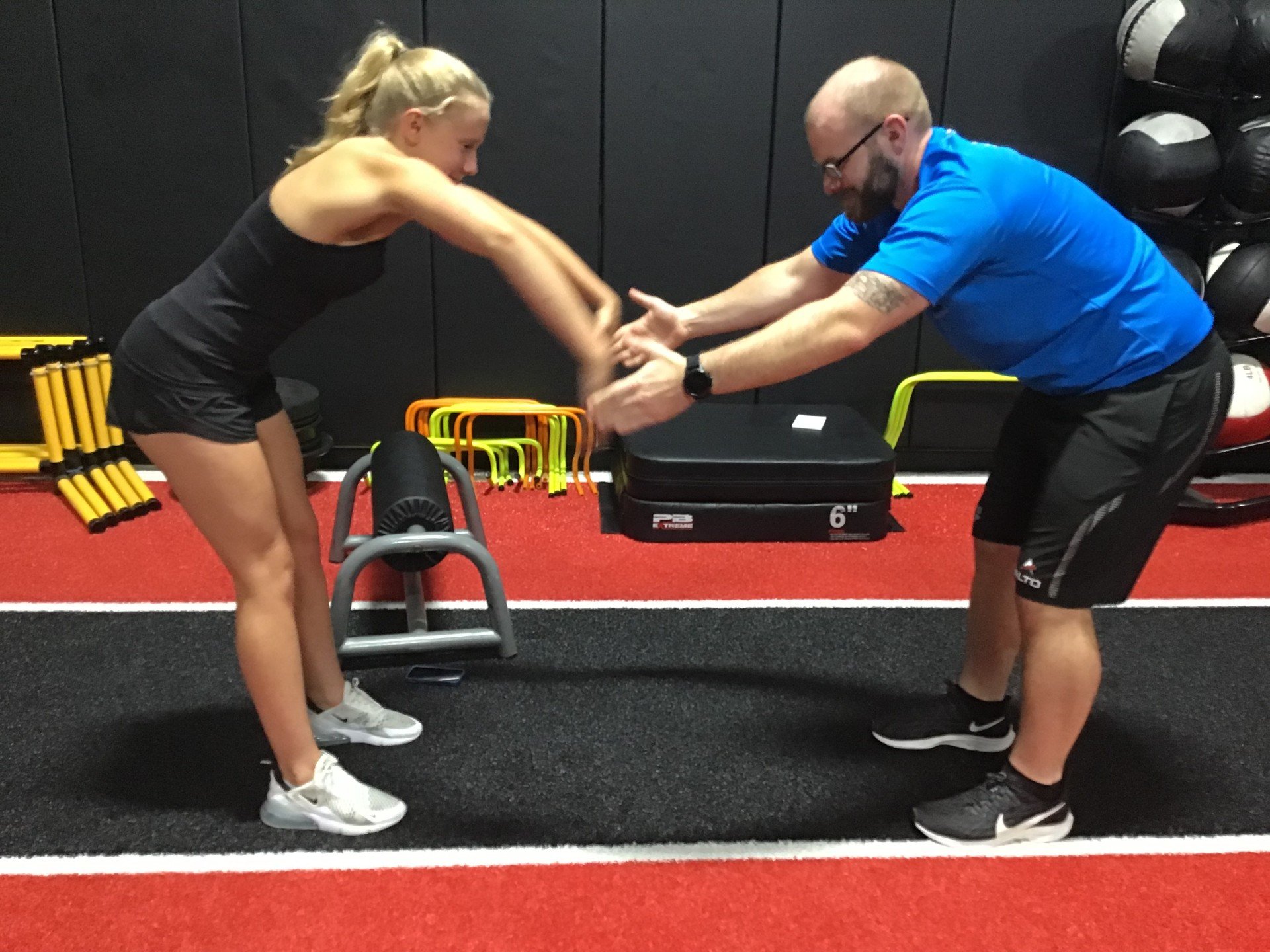
Functional Movement Testing
We look at how your body moves through swim-specific patterns to identify faulty mechanics or compensation strategies.
Training & Injury History Review
Understanding your weekly yardage, dryland routine, and past injuries helps connect the dots between how you train and how your body responds.
Why Swim Injury Screens Matter
Prevent Overuse Injuries
Catching small issues early can significantly reduce the risk of swimmer’s shoulder, neck pain, and hip problems.
Boost Performance
Better mobility, balanced strength, and efficient movement patterns translate directly to faster, smoother swimming.
Personalized Training Guidance
You’ll receive tailored recommendations for dryland, mobility, and strength training based on your specific needs.
Fix the Root Cause
Sometimes what looks like a technique flaw is actually a physical limitation. A screen helps determine whether your stroke mechanics are being limited by your body—not your coaching.
Who Should Get Screened?
Competitive swimmers
High school and club swimmers
Master’s swimmers
Triathletes
Fitness and recreational swimmers
If you’re training regularly, a swim injury screen can help you stay ahead of problems before they interrupt your season.
A Few Quick Tips to Stay Healthy This Swim Season
1. Don’t Ignore the “Little Ache”
That mild shoulder soreness or tight upper back isn’t something to push through indefinitely. Small aches are often early warning signs. Addressing them early can prevent weeks—or months—out of the water later.
2. Respect Recovery
When seasons overlap, recovery often takes a back seat. Prioritize sleep, nutrition, and at least one true recovery day each week.
3. Balance Your Training
Endless pulling without adequate scapular and core strength can overload your shoulders. Dryland training helps restore balance.
4. Speak Up Early
If something feels off, tell your coach and get it checked. Early assessment almost always leads to a faster, smoother fix.
Why Swimmers Benefit from Swimmer-Specific Physical Therapy
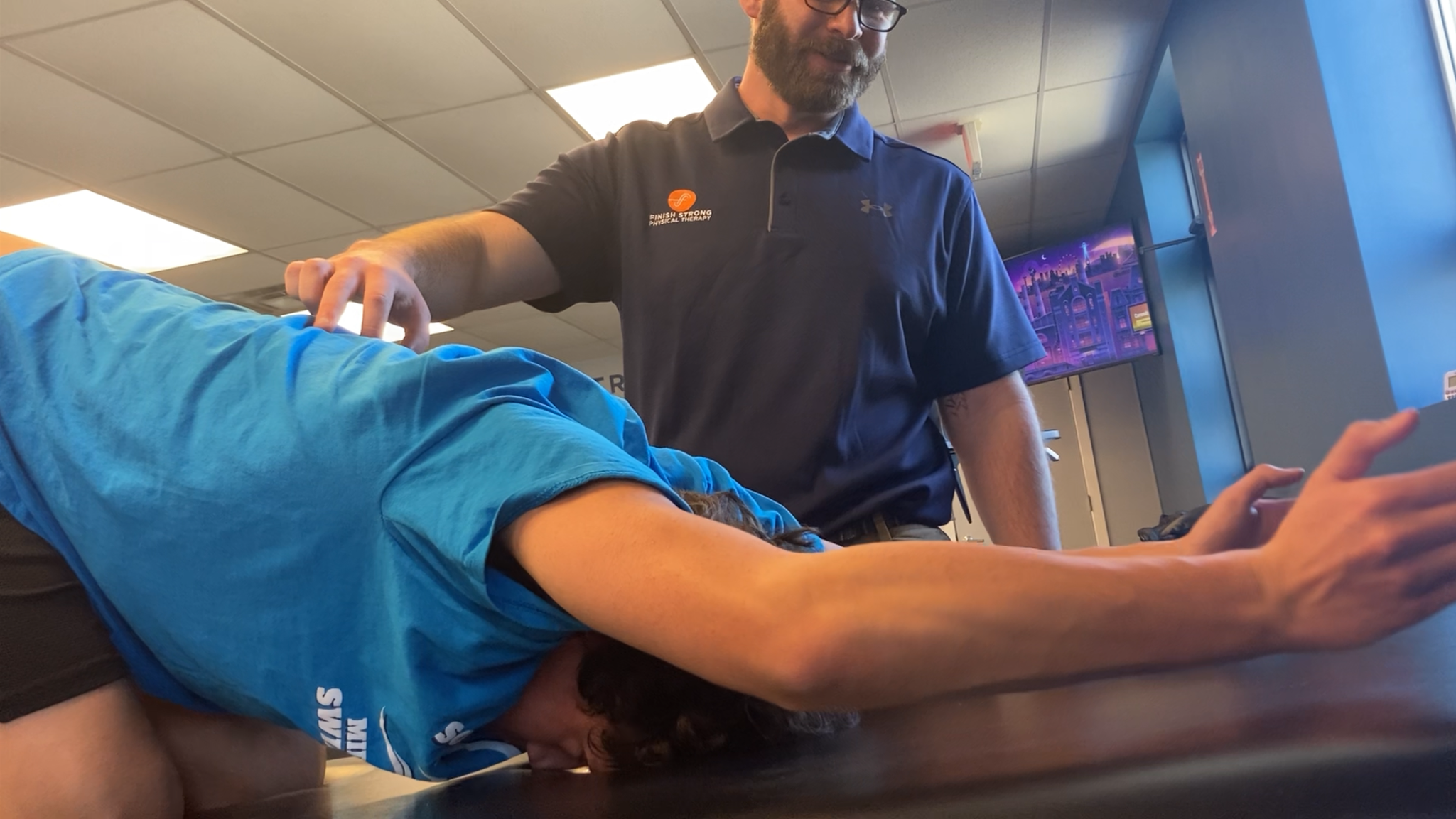
When you’re a swimmer, rehab needs to go beyond simply “getting out of pain.”
General vs. Swimmer-Specific Care
A general physical therapy program may stop once you can walk, lift, or perform daily tasks comfortably. But swimmers need more. Our approach focuses on restoring athletic function, with attention to stroke mechanics, training demands, and performance goals.
Reduce the Risk of Re-Injury
Pain relief is just the first step. If the mechanical issues in your stroke aren’t addressed, you’re more likely to get hurt again when training resumes. Swimmer-specific rehab targets the root cause—not just the symptoms.
Get Back to the Pool—Better Than Before
With targeted rehab, swimmers don’t just recover—they improve. Better mobility, stronger support muscles, and refined movement patterns set you up for faster swimming and fewer setbacks in the future.
Train Smart. Swim Strong. Stay Healthy.
Whether you’re in the middle of a busy season or preparing for what’s ahead, proactive screening, smart dryland training, and swimmer-specific care can make all the difference.
If your body is trying to tell you something—don’t wait. Listening early is one of the strongest moves a swimmer can make.