
What You Need to Know About VO2 Max
What used to be discussed mostly by exercise science nerds is now a mainstream topic, namely, VO2 max. In this post, we’ll give you a quick overview of what VO2 max is, its importance for endurance performance and overall health, and how best to improve it.
What is VO2 Max?
VO2 max is shorthand for maximal oxygen uptake. It’s your body’s ability to transport large amounts of oxygen to your muscles and your muscles’ ability to extract that oxygen and use it to produce energy. It’s a key contributor to endurance performance, but as we’ll see in a bit, not the only one, and in some cases, not even the most important one.
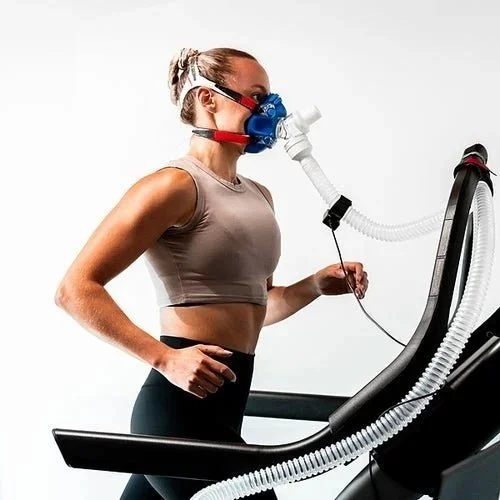
The only way to get an accurate measurement of your VO2 max is via a test administered by trained technicians in a performance lab. The test involves running on a treadmill or riding a stationary bike at an increasingly hard effort until exhaustion. During the test, you wear a special mask that captures all the oxygen you breathe in and all of carbon dioxide you breathe out.
Ignore any VO2 max-related from your smartwatch or other wearables. Studies have found them to be off by anywhere from 5% to almost 17%.
VO2 Max and Endurance Performance
VO2 max is one of many components that determine how fast you can run, ride, and do other aerobic activities. But even in events where VO2 max is the most important contributor to results, those with the highest VO2 max values don’t necessarily win.
For example, in running, those who excel in events from 1500 meters to 2 miles tend to have higher VO2 max values than the top performers in shorter and longer races. But the winner of a given mile race isn’t simply the one with the best VO2 max. (Otherwise, there would be no need to have a race—medals could just be awarded based on lab tests.) Other key contributors to aerobic performance, such as running economy, lactate threshold, and muscle fiber type, are also important. So too are more subjective factors, such as tactics, psychological strength, and pure luck.
For most readers of this blog, VO2 max isn’t the most important contributor to success. That’s because VO2 max is a measurement of your maximal aerobic potential; even world-class athletes usually can’t that effort level for 10 minutes. Those of us running a half marathon or doing an Olympic triathlon or riding a century work at a lower effort level, but for much longer. Some of those other contributors named above, such as lactate threshold and for how long you can work just under that threshold, are more important.

One factor we haven’t mentioned yet is resilience. Think of it as high-level durability—after an hour, can you keep up the same effort level, not only in terms of your breathing, but also your posture, form, and muscular soreness? Resilience is a huge contributor to why you might pull away from your training partner in the final third of a race, even though you two seemed evenly matched at the halfway point. It doesn’t matter how good your training partner’s VO2 max is if her form crumples or her legs cramp once she really starts to tire.
VO2 Max and Health
One reason that VO2 max is such a hot topic now is because many health influencers say it’s a good predictor of longevity.
This is true, in that VO2 max is closely related to cardiovascular (CV) fitness, and research has shown for decades that, on average, people with good CV fitness live longer than people with poor CV fitness. But VO2 max and CV fitness aren’t synonymous. Most of the studies relating CV fitness with longevity are based on people’s exercise habits, not their known VO2 max scores. (Think about it: How many people do you know who have had their VO2 max measured in a lab?)
It’s also worth remembering that even CV fitness, not to mention VO2 max, is only one aspect of general wellness. Muscular strength and balance are two other key contributors to successful aging.
Focusing only on VO2 max as a stand-in for longevity is sort of like teaching to the test—you might wind up with a great score but fall short in important matters the test doesn’t cover.
How Best to Improve VO2 Max
None of this is to say that VO2 max doesn’t matter for endurance performance or health. But training with the specific goal of improving it isn’t the be all and end all.
For one thing, simply putting in regular conversational-effort runs, rides, swims, and skis will boost your VO2 max well above that of your sedentary contemporaries. Working at a percentage of your VO2 max for longer periods is especially effective for newer athletes who haven’t built up years of an aerobic base.
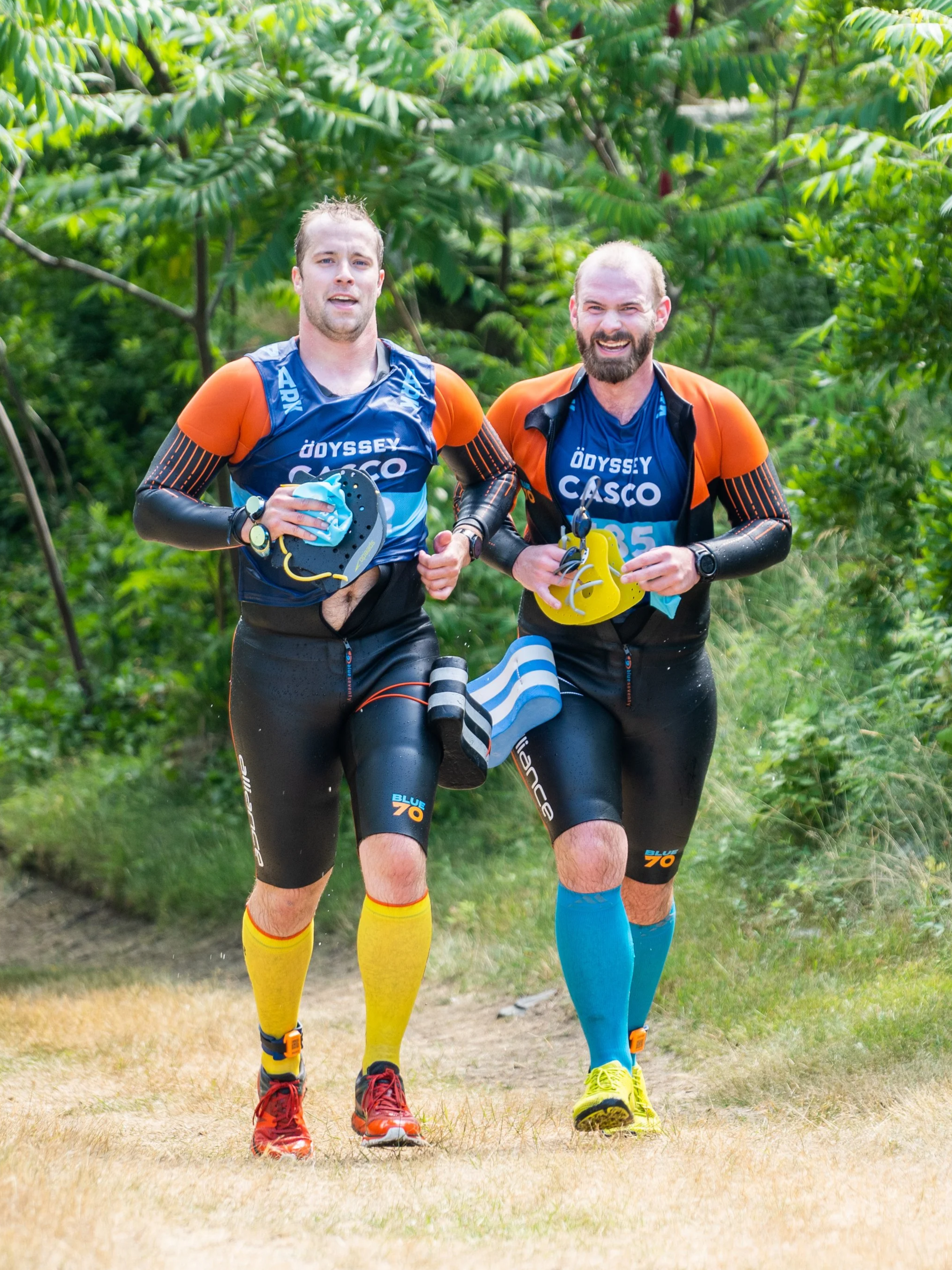
For competitive endurance athletes, occasional workouts at near peak VO2 max should be a given. These workouts have been staples long before VO2 max became a buzzword. In running, for example, what a lot people now call VO2 max workouts are classics like 800-meter repeats at 3K to 5K pace, with a 400-meter jog between.
The key to effective VO2 max workouts is to accumulate as much time as possible near your VO2 max. Consider two running workouts that each include 6,000 meters of intervals—one of 15 x 400 meters and the other of 5 x 1,200 meters. When you run 400-meter reps, you’re in the optimal zone for perhaps 45 seconds per interval, so 15 reps would mean accumulating about 11 minutes of work at the optimal intensity level. During the 1,200-meter reps, however, you’ll be in the desired intensity zone for 3 to 4 minutes, meaning you’ll accumulate between 15 and 20 minutes in that zone.
As with other types of workouts, harder VO2 workouts don’t necessarily make them more effective. Go too fast, and you’ll be working above your VO2 max, and you’ll have to do shorter reps, or slow, or cut your workout short, or all three. Taking too short of a rest between repeats will lead to the same problems. As a general guide, do reps that take 2 to 6 minutes, at an effort level you could sustain for 8 to 15 minutes. Do shorter reps for the 8-minute effort level, longer for the 15-minute level. Between reps, take a light active recovery (jog, spin, walk) for 50% to 90% of the duration of your reps; generally, the longer your reps, the more toward the longer end of that recovery range you should take.
VO2 workouts are among the hardest you can do. After all, you’re working near your cardiac max for a long time. They’re also likely to induce muscular fatigue for a day or two, and they’re psychologically demanding. Most endurance athletes shouldn’t do more than two to three VO2 workouts a month. More than that will mean you’ll have to compromise other key types of workouts. You’ll also likely lose some of your enthusiasm for training. Consistent B+ training week after week after week eventually trumps occasional go-to-the-well A+ workouts. Finish Strong’s Dan Frey is a certified run coach, and Sam LaRiviere is a certified triathlon, swim, and ultrarunning coach. They can help you create a customized training plan that incorporates the right amount of VO2 max training for your current fitness level and competitive goals.
Schedule an appointment today.